

 Share
Share
The business aviation sector finds itself at a critical juncture where sustainable aviation fuels represent both the most viable pathway to decarbonisation and one of its greatest operational challenges. While the industry grapples with mounting regulatory pressures and shifting customer expectations, the reality on the ground tells a more complex story than the headlines might suggest.
The Carbon Challenge Facing Business Aviation
Business aviation's carbon footprint, though representing roughly 2% of total aviation emissions at 35-40 million metric tons annually, carries disproportionate weight in public discourse. The sector's per-passenger emissions—running 5 to 14 times higher than commercial airlines depending on aircraft configuration—have made it a lightning rod for environmental criticism, particularly in Europe where regulatory frameworks like ReFuelEU Aviation are reshaping operational requirements.
Compatibility with Modern Aircraft and Manufacturer Progress
The technical landscape for SAF integration appears promising on paper. Most modern business jets can handle up to 50% SAF blends without modification, and manufacturers like Gulfstream, Bombardier, and Dassault are pushing toward 100% certification. Yet the devil remains in the details of supply chain logistics and economic viability.
Why SAF Usage Remains Below 1% in Business Aviation
Current SAF adoption across business aviation hovers below 1% of total fuel consumption—a figure that underscores the gap between industry ambitions and operational reality. The fuel itself commands premium pricing of 2-5 times conventional Jet-A, creating immediate cost pressures that even generous policy incentives struggle to fully offset.
SAF Production Pathways and Market Dynamics
The SAF production landscape reveals interesting regional variations and technological maturity levels. HEFA-based fuels dominate current supply, leveraging used cooking oils and animal fats, but feedstock limitations constrain scalability. More promising are emerging pathways like alcohol-to-jet and power-to-liquid technologies, though these remain in earlier development stages.
Economic Realities and Market Forces
The economics of SAF adoption reveal stark regional differences. North American operators face some of the highest premiums, with West Coast SAF pricing reaching $4.50+ per liter compared to conventional fuel at $0.70-$1.00. European markets show somewhat more favourable pricing, though still at substantial premiums.
Customer willingness to absorb these costs varies significantly. European clients demonstrate higher tolerance for sustainability premiums—up to 18% according to recent surveys—while U.S. customers typically accept 8-10% increases. Corporate clients with established ESG mandates drive much of the demand, while ultra-high-net-worth individuals often seek visible sustainability credentials.
Future Outlook: Innovation, Scalability, and Strategic Pathways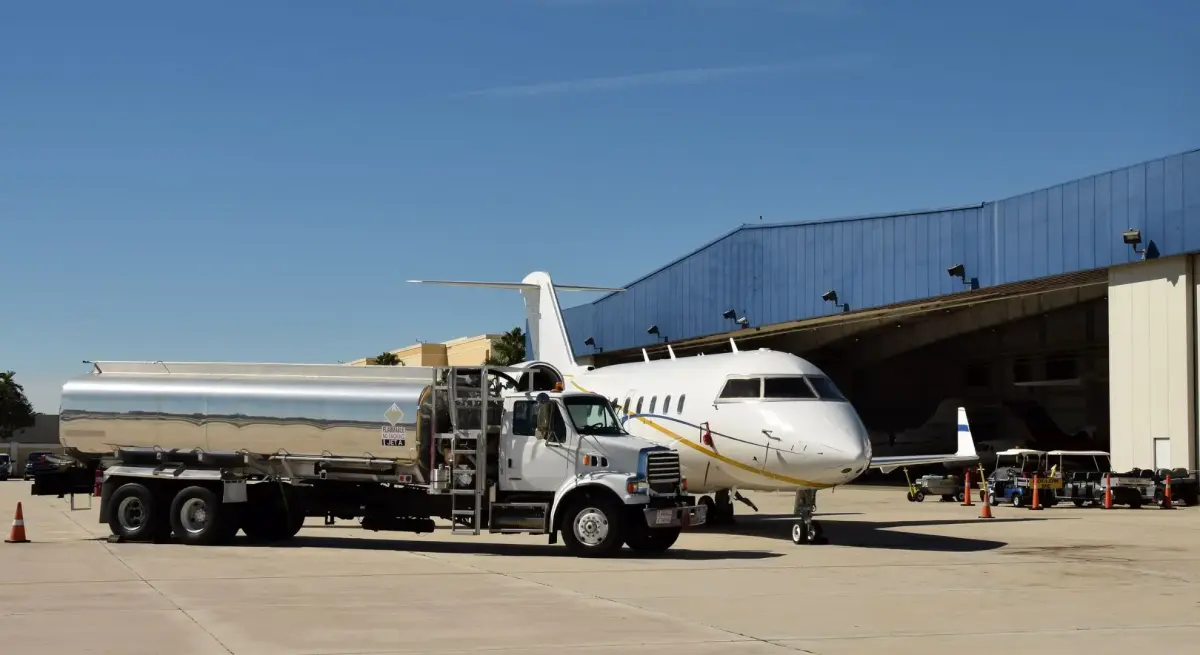
The path forward requires addressing several fundamental challenges. Supply chain development must extend beyond major hubs to secondary airports where much business aviation activity occurs. Feedstock competition with other industries and food systems poses long-term sustainability questions that advanced synthetic fuels may need to resolve.
Industry Collaboration Is Key to Scalable SAF Adoption
Industry collaboration through initiatives like the Business Aviation Coalition for SAF shows promise, but requires sustained commitment and coordination across a traditionally fragmented sector. The success of pooled procurement models and shared infrastructure investments will likely determine whether business aviation can achieve meaningful SAF adoption rates.
Building Trust Through Transparency and Verification
Perhaps most critically, the sector must navigate between genuine sustainability progress and the perception of greenwashing. Robust third-party verification and transparent reporting mechanisms will prove essential for maintaining credibility as SAF adoption scales.
Aligning Incentives to Make Sustainable Aviation Practical
The business aviation industry's SAF journey reflects broader tensions between environmental necessity and economic reality. While technical solutions exist and regulatory frameworks are emerging, the ultimate success depends on aligning market incentives, infrastructure development, and customer expectations in ways that make sustainable flight not just possible, but practical for everyday operations.
Source: