
Can You Smoke on a Private Jet?
The short answer is: sometimes, but never assume it is allowed.
Commercial flights are simple. Smoking cigarettes, cigars, pipes, cannabis, and e-cigarettes is prohibited on scheduled passenger flights. Private aviation is more nuanced. A private jet charter gives you more control over schedule, aircraft selection, airports, and onboard preferences, but it does not remove aircraft safety rules, operator policy, owner restrictions, or the authority of the crew.
For charter clients, the practical answer is that most private jets are non-smoking by default. A small number of aircraft may permit cigarette smoking with advance approval, written confirmation, and often additional cleaning terms. Cigars are harder to approve. Vaping is frequently treated the same as smoking. If smoking matters to the trip, it should be disclosed before aircraft sourcing begins.
Commercial flights vs private jets
On commercial airlines, smoking is not a matter of airline preference. In the United States, federal law prohibits smoking on scheduled passenger flights, and U.S. regulations treat electronic cigarettes as smoking for these purposes. Similar rules are now standard across global airline travel. The reason is straightforward: commercial airlines carry unrelated passengers and crew in a shared public transport environment, so the rule must be uniform, enforceable, and clear.
Private jets are different because the aircraft is being chartered or operated for a specific mission rather than sold seat by seat to the public. That creates more flexibility, but not unlimited freedom. The aircraft owner, operator, insurance terms, maintenance standards, and pilot in command can all affect whether smoking is allowed.
This is where many first-time charter passengers misunderstand private aviation. Paying for the whole aircraft does not mean every onboard activity is automatically permitted. If the aircraft is chartered, the passenger is using someone else’s asset. The cabin interior, ventilation systems, upholstery, carpets, and residual aircraft value all matter.

Can you smoke on a private jet?
Yes, smoking may be possible on some private jets, but only when the operator or aircraft owner permits it in advance. If the charter agreement or trip confirmation does not explicitly allow smoking, passengers should treat the aircraft as non-smoking.
In practice, most private jet operators do not allow smoking. Those that do may limit approval to cigarettes rather than cigars, restrict where smoking can occur, require ashtrays or specific disposal procedures, and add cleaning or damage liability terms. The crew will not usually make informal exceptions in flight if the aircraft was booked as non-smoking.
The most reliable way to handle the request is to raise it before booking. A broker can then search for a suitable private jet charter option where smoking is owner-approved and operationally acceptable. This may reduce aircraft availability and can affect charter pricing because the aircraft may need specialist post-flight cleaning or more limited onward use.
Why most private jets do not allow cigarettes
The main reason is not moral judgment. It is aircraft protection.
Smoke residue can settle into leather, carpets, sidewalls, headliners, curtains, air vents, and soft cabin materials. Even when the air circulation system clears visible smoke quickly, smell and residue can remain. That matters because the next charter client may expect a pristine cabin, and the owner may want to protect the aircraft’s resale value.
There are also safety and operational concerns. An aircraft cabin is a controlled environment with strict rules around fire risk, waste disposal, oxygen systems, smoke detection, and crew authority. A cigarette burn on a seat, table, carpet, or sidewall can lead to a substantial damage charge. Smoking without permission can also trigger contractual penalties, cleaning fees, or refusal of future service.
This answers a common question seen in aviation forums: “If I’m paying thousands per hour, why can’t I smoke?” Because charter cost buys access to the aircraft for a mission; it does not transfer ownership of the aircraft or override the operating rules attached to it.
Cigarettes, cigars, vaping, and cannabis
What is usually allowed?
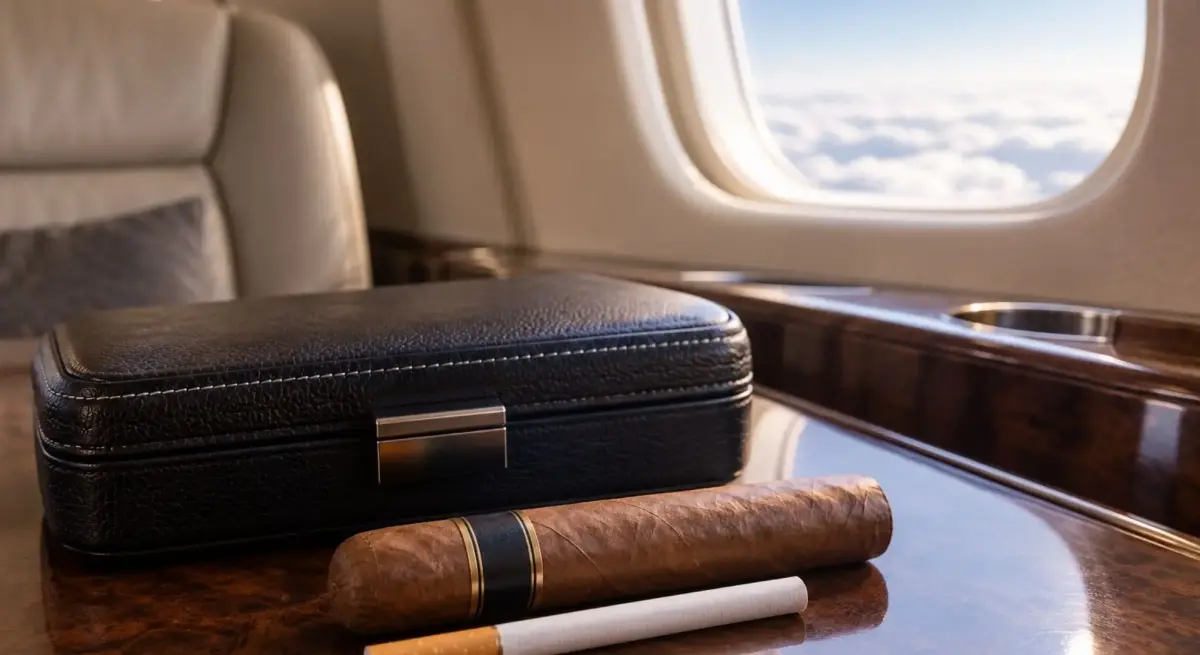
Cigarettes are the most likely form of smoking to be considered, but only on aircraft where the owner and operator permit it. Even then, approval should be confirmed in writing. Cigars are more difficult. Cigar smoke is heavier, stronger, and more likely to leave a lasting odor in the cabin. An operator that accepts cigarette smoking may still reject cigars.
Vaping
Vaping is not a guaranteed workaround. On U.S. passenger operations covered by federal smoking rules, e-cigarette use is prohibited. Lithium-battery vaping devices are generally restricted to carry-on baggage or the passenger’s person, protected against accidental activation, and may not be charged onboard. Private operators may impose broader prohibitions.
Cannabis
Cannabis is different again. Passengers should not carry or use cannabis merely because it is legal under local state or national law. In the United States, marijuana remains unlawful under federal law except for narrow federally authorized circumstances, and state legalization does not authorize carriage by aircraft under federal jurisdiction. International flights additionally require compliance with the laws of every country involved.
Why do private jets have no-smoking signs?
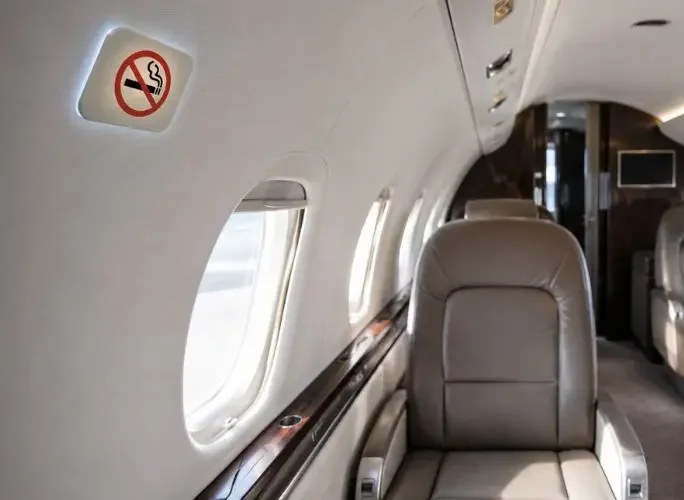
Many private aircraft, including Cessna Citation jets and other business aircraft, may display no-smoking signs or placards even when the aircraft is privately operated. This does not always mean the aircraft can never be approved for smoking. It often reflects certification, passenger information, lavatory rules, operator policy, or standard aircraft equipment.
The sign also matters because the crew needs clear authority during phases of flight. Smoking is commonly prohibited during taxi, takeoff, and landing, and lavatory smoking is not acceptable. Tampering with smoke detectors or safety equipment is a serious issue regardless of whether a cabin smoking request was approved.
The practical rule is simple: read the sign, follow crew instructions, and rely only on written approval. If a broker, operator, or crew member has not confirmed smoking is allowed, do not light a cigarette onboard.
How to book a smoking-permitted private jet charter
If smoking is a requirement, disclose it early. Waiting until after aircraft confirmation can limit options, increase costs, or make the request impossible.
A professional air charter service should clarify:
- whether smoking is permitted on the specific aircraft
- whether cigarettes, cigars, or vaping are treated differently
- whether approval is written into the charter terms
- whether cleaning fees or damage liability apply
- whether any route, country, or airport rules affect the request
- whether a non-smoking aircraft is more suitable for other passengers
Transparent charter pricing matters here because smoking approval can change the aircraft pool and the final cost. A smoking-permitted aircraft may not be the cheapest or closest available option. It may require repositioning, additional cleaning time, or a different cabin category. The right broker should explain those trade-offs before you book a private jet, not after the invoice arrives.