


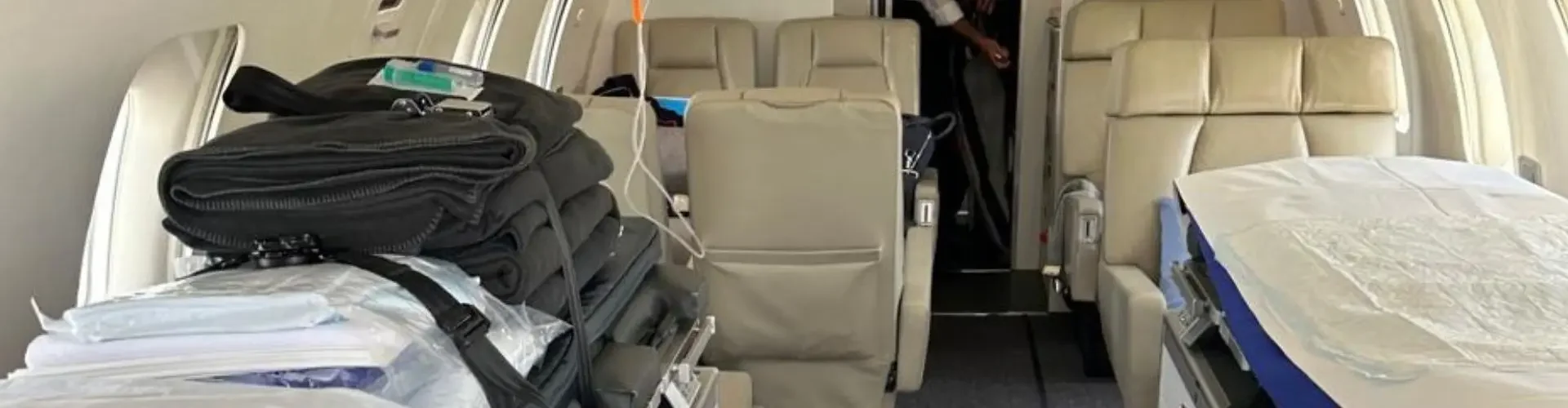
How ICU-Capable Medevac Flights Work in the US
When critical patients need air transport, survival often depends on the quality of the medical equipment on board. A modern air ambulance isn’t just a jet; it’s a fully functional intensive care unit (ICU) in the sky.
Every system, device, and monitor on board is made to support life. They ensure stability and care, no matter the altitude or distance.
In this article, we will look at the ICU-level equipment used on medevac flights in the United States. We will also see how Jetbay makes sure each mission meets hospital-grade medical standards from takeoff to landing.
For a comprehensive outlook of air ambulance services, explore our Air Ambulance & Medavac Charter Services in the US article.
What “ICU-Level” Means in Air Ambulance Terms
An ICU-level setup means that a patient can receive the same level of care mid-flight as they would in a hospital intensive care unit.
This is critical for patients who:
- Are on ventilators or life support
- Require IV infusions or cardiac monitoring
- Have suffered trauma or organ failure
- Need continuous oxygen therapy or sedation
Every Jetbay medical flight includes advanced medical equipment, a certified medical crew, and life-support systems tailored to the patient’s condition.
Life-Support Systems and Core ICU Equipment
1. Ventilation and Oxygen Systems
Jetbay’s aircraft are equipped with advanced transport ventilators, capable of supporting adult, pediatric, and neonatal patients. These systems automatically adjust pressure and oxygen levels to account for changes in cabin altitude.
Supplemental oxygen tanks, flow regulators, and backup systems ensure uninterrupted respiratory support during flight.
2. Cardiac and Vital Sign Monitoring
Every medevac flight carries multi-parameter monitors that track heart rate, blood pressure, ECG, oxygen saturation, and temperature in real time.
These devices are compact yet hospital-grade, allowing the onboard medical team to respond instantly to any change in vital signs.
If a cardiac event occurs, a defibrillator is always within reach, identical in function to those found in emergency rooms.
3. Infusion Pumps and IV Therapy
Continuous IV infusions are often essential for critical patients. Jetbay’s aircraft carry infusion and syringe pumps that allow precise control of medications, including pain relief, sedatives, or fluids.
These pumps are battery-backed and turbulence-resistant, ensuring no interruptions even during altitude changes or long-haul flights.
4. Suction and Airway Management
For patients with respiratory conditions or trauma, maintaining airway clearance is vital. Onboard suction devices allow the medical team to clear airways and provide assisted ventilation when needed.
Each flight also includes emergency airway kits, intubation equipment, and manual resuscitators (ambu bags) as backups to powered systems.
5. Emergency and Trauma Equipment
Every air ambulance carries a comprehensive emergency pack, which includes:
- Trauma dressings and wound care supplies
- Cervical collars and immobilization devices
- Splints and bandages
- Portable ultrasound (on select aircraft)
This ensures readiness for unexpected complications during the mission.
6. Medication and Cold Storage
Jetbay’s medevac flights maintain temperature-controlled medical storage for critical drugs, vaccines, and blood products.
Medications include pain management, cardiac support, antiarrhythmics, sedatives, and emergency treatment for allergic or cardiac reactions.
7. Power Backup and Redundancy
Every ICU system onboard has dual or backup power sources, including battery packs and converters linked to the aircraft’s electrical system.
This redundancy guarantees life-support continuity even during power fluctuations or refueling stops.
Air Ambulance Setup (US) and Specialized Configurations for Different Patients
Each patient’s needs determine the setup. Here’s how configurations are customized across various scenarios:
1. Adult Critical Care
Equipped with a ventilator, cardiac monitor, IV pumps, and stretcher secured to the cabin floor.
2. Pediatric or Neonatal
Includes incubators with integrated temperature control, oxygen, and pediatric ventilators, overseen by specialized neonatal nurses.
3. Post-Surgical Transfers
Focus on pain control, infection prevention, and fluid management with infusion support and continuous monitoring.
4. Organ Transplants or Blood Transport
Dedicated storage compartments maintain regulated temperatures for biological materials during rapid transit.
Each setup follows international aeromedical standards, ensuring safety and compliance under FAA Part 135 medical transport regulations.
Why ICU Air Ambulance Equipment Matters
Transporting a critically ill patient involves more than speed, it’s about ensuring medical stability at 40,000 feet.
In-flight conditions can affect pressure, oxygen levels, and fluid balance. Without proper equipment, these variables could compromise recovery.
By using hospital-grade ICU systems, Jetbay ensures that:
- Care is continuous, even during long-haul flights.
- Patient vitals are monitored in real time.
- Any medical emergency can be treated immediately.
- Handovers between hospitals are seamless and informed.
This high level of readiness is what defines Jetbay’s commitment to safety and care.
Jetbay and Hospital-Grade Air Ambulances
When life depends on precision, Jetbay’s ICU-equipped air ambulances deliver hospital-grade care at altitude. From advanced ventilators and cardiac monitors to expert flight medics, every detail is designed to keep patients stable and safe until they reach definitive care.
Request a medevac quote now for our air ambulance service and let Jetbay bring the ICU to the skies — wherever it’s needed.
Frequently Asked Questions about Medevac Aircraft Equipment in the USA
1. Are air ambulances equipped like hospital ICUs?
Yes. Jetbay’s aircraft carry the same life-support systems, monitors, and medications used in ground ICUs.
2. What happens if an in-flight medical equipment fails during the flight?
Every critical device has a backup unit or manual alternative. Redundant systems ensure continuous care without interruption.
3. Can the aircraft handle multiple patients?
Yes, larger jets like the Challenger 604 can accommodate more than one patient or a patient with a companion, depending on configuration.