
A Practical Guide to Private Jet Deicing
For clients arranging winter private jet charter, deicing is one of the most important operational details to understand before departure. It is not a luxury add-on, a convenience service, or a negotiable line item. It is a safety procedure used when frost, ice, snow, or freezing contamination is present on the aircraft before takeoff.
The challenge is usually not whether deicing is necessary. The real questions are more practical: when might deicing be required, how much can it cost, why is it often billed separately, and how can the itinerary be planned to reduce surprises?
This guide explains private jet deicing from the client’s perspective, with a focus on cost transparency, winter itinerary planning, and the commercial realities behind charter operations.
What is private jet deicing?
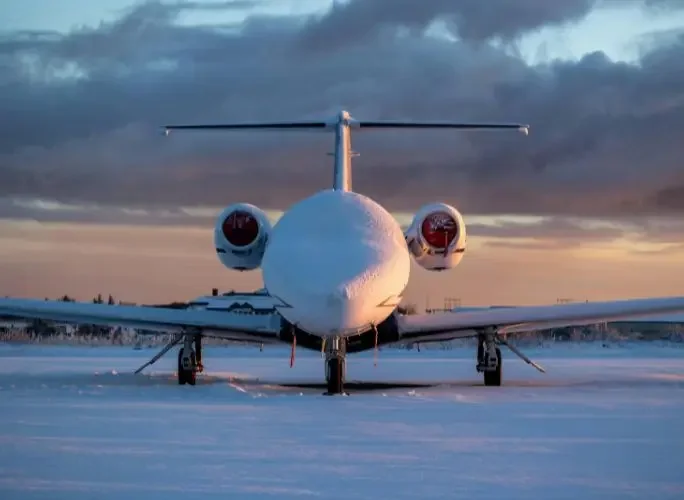
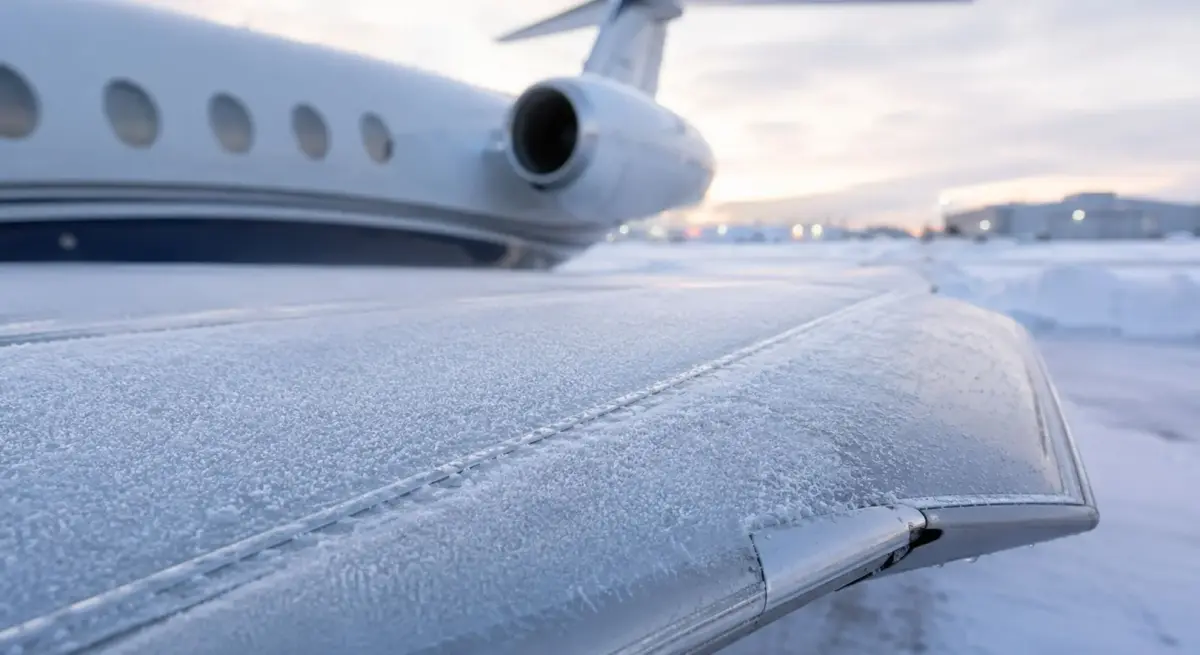
Private jet deicing is the process of removing frozen contamination from an aircraft before departure. This may include frost, ice, snow, slush, or freezing residue on wings, tail surfaces, engine inlets, control surfaces, or other critical areas. Even a thin layer of frost can affect airflow and aircraft performance, which is why aircraft are expected to depart with clean, safe surfaces.
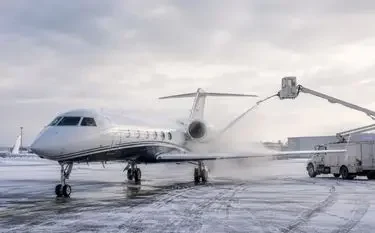
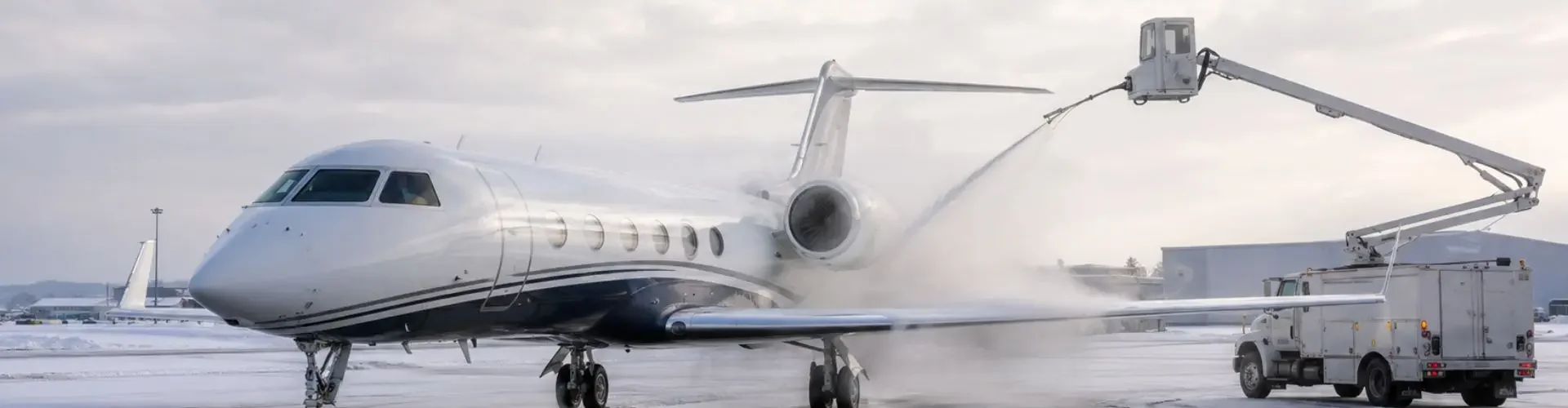
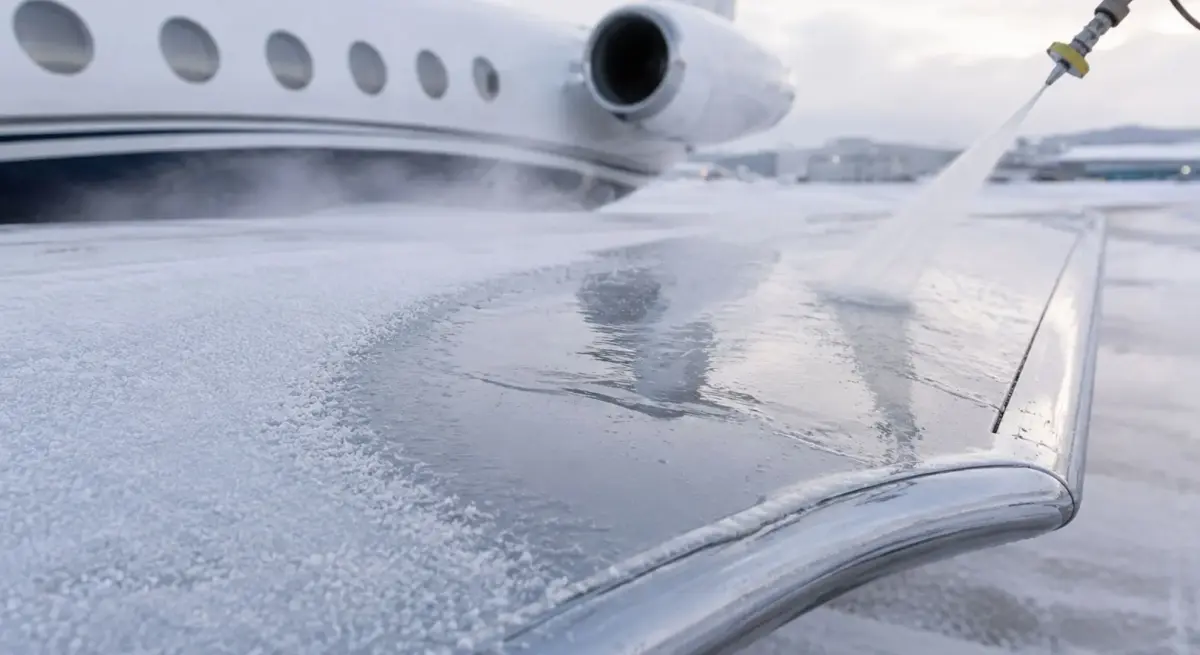
Deicing is usually performed using heated glycol-based fluid applied by trained ground personnel. In some conditions, the process may be followed by anti-icing, which applies a protective fluid designed to delay further accumulation before takeoff. Deicing removes what is already there. Anti-icing helps protect the aircraft for a limited period while it waits to depart.
For passengers, the important point is simple: the aircraft cannot safely depart until the crew is satisfied that the aircraft is clear and compliant with operating requirements. The pilot in command has final authority, and a broker or client cannot override that decision.
When is deicing required on a private jet?
Deicing may be required whenever frozen contamination is present or likely to affect the aircraft before takeoff. Common triggers include overnight frost, fresh snowfall, freezing rain, sleet, wet snow, ice pellets, or cold temperatures combined with moisture. The need can arise at major city airports, mountain airports, northern regional airports, and even during shoulder seasons when temperatures drop unexpectedly.
Clients often associate deicing with deep winter, but it can also apply in late autumn and early spring. A clear night at a cold airport can produce frost even when there is no snowfall. Mountain destinations can also see freezing conditions outside the main ski season, especially for early-morning departures.
This is why deicing is difficult to confirm far in advance. A charter broker may flag it as a possibility at booking, but the final requirement is usually determined close to departure, based on actual aircraft condition, local weather, airport procedures, and crew assessment.
How much does private jet deicing cost?
Private jet deicing costs vary widely because the charge depends on aircraft size, weather conditions, fluid volume, labour, local airport pricing, and whether one or more applications are needed. A light jet with minor frost may require a relatively limited treatment. A long-range jet covered in wet snow at a busy winter airport can require substantially more fluid and time.
As a broad planning guide, deicing for smaller and midsize private jets may often fall from several hundred dollars to a few thousand dollars. Larger aircraft, severe contamination, active freezing precipitation, or high-demand airports can push the cost materially higher, sometimes into five figures. The cost is not calculated like an hourly aircraft rate; it is usually tied to the actual service performed by the ground handler or FBO.
Key cost drivers include:
- Aircraft category and surface area
- Amount and type of contamination
- Type and quantity of deicing or anti-icing fluid used
- Local airport and FBO pricing
- Labour and equipment availability
- Weather intensity during the departure window
- Whether the aircraft needs a second application before takeoff
This variability is why transparent charter pricing matters. For winter trips, clients should expect a clear explanation of whether deicing is included, estimated, waived, or billed at actual cost if required.
Why deicing is often billed separately?
Deicing is commonly treated as a pass-through operational expense because the exact cost is not known until the service is performed. The aircraft may not need deicing at all. Or it may require a quick frost removal, a more extensive treatment after snowfall, or a second application if departure is delayed during active winter weather.
In many charter quotes, deicing appears as a conditional line item. It may be noted as “if required, billed at actual cost,” or included as an estimated allowance when the risk is high. The final invoice may only be available after the FBO or handling provider confirms the exact charge.
For PAs, EAs, and travel managers, the best approach is to ask before confirming the booking:
- Is deicing included, estimated, or billed separately?
- Is there a deicing waiver or insurance option available?
- Will the final cost be supported by third-party documentation?
- Could hangarage reduce the likelihood of treatment?
- Are there alternative airports with better winter handling options?
A reputable air charter service should explain this clearly before travel, rather than leaving the client to discover it after the trip.
Can deicing costs be reduced?
Deicing should never be avoided when it is required for safety. However, good planning can reduce the likelihood, severity, or surprise of the cost. The most effective strategy is usually hangarage. Keeping the aircraft indoors overnight can prevent frost, snow, and ice from accumulating on the aircraft before departure.
Hangarage is not always available, especially at busy winter airports or peak ski destinations. It can also carry its own cost. But in many cases, paying for overnight hangar space may be more predictable than exposing the aircraft to freezing conditions on the ramp.
Other planning strategies include choosing a later departure when temperatures are expected to rise, avoiding tight schedules during active snowfall, selecting airports with stronger winter ground-handling infrastructure, and confirming the operator’s winter operations approach before the flight. For complex itineraries, repositioning the aircraft or using a different airport may sometimes be sensible, but this depends on passenger convenience, airport suitability, runway performance, slots, crew duty limits, and total charter cost.
For clients arranging travel on behalf of someone else, the most useful step is expectation-setting. If a winter itinerary involves New York, London, Geneva, Zurich, Toronto, Denver, Aspen, Chicago, Boston, the Alps, Scandinavia, or other cold-weather markets, deicing should be treated as a realistic operational variable.
What clients should know on the day of departure
On the day of travel, deicing can affect both timing and billing. If treatment is required, the aircraft may need to be sprayed shortly before departure. In active precipitation, timing matters because anti-icing protection has a limited effective window, often referred to operationally as holdover time. If the aircraft waits too long after treatment, the crew may need to reassess conditions or repeat the process.
This is one reason winter departures can be less predictable than summer departures. Even with private aviation, the aircraft is still part of an airport operating environment. Deicing queues, runway sequencing, snow clearance, visibility, and air traffic delays can all affect departure timing.
For assistants and travel arrangers, the practical advice is to avoid over-compressing onward arrangements in winter. Leave margin for ground transport, meetings, onward commercial flights, yacht transfers, villa arrivals, or connecting aircraft. A 20-minute operational delay can become more consequential when the schedule has no buffer.
Clients should also know that boarding may happen before or after deicing depending on airport procedure, aircraft type, and local safety rules. At some airports, passengers may board in a hangar or FBO environment before the aircraft is moved. At others, deicing may occur after passengers are onboard. The crew and ground team will manage the safest and most appropriate sequence.
How Jetbay helps clients plan winter charter flights
For winter private jet charter, the value of a broker is not only finding an aircraft. It is also helping the client understand operational variables before they become surprises. Deicing is a good example. It sits at the intersection of safety, weather, aircraft suitability, airport infrastructure, and final billing.
Jetbay helps clients compare aircraft and operator options with practical visibility over likely trip variables, including winter handling considerations where relevant. That may include discussing airport choice, hangar availability, likely deicing exposure, quote structure, aircraft category, routing, and schedule flexibility.
When you book a private jet in winter, the most important commercial question is not simply the lowest headline price. It is whether the quote is clear, the operator is suitable, and the likely operating variables are explained in advance. Transparent charter pricing gives clients a more accurate view of the journey they are actually buying.