
A First-Time Traveller Guide to Flying with Pets by Private Jet in Indonesia
Travelling by private jet can make a pet journey more controlled, more comfortable, and better timed around the animal’s needs. But in Indonesia, private aviation does not remove the animal-import process. Pets are still subject to national quarantine rules, approved entry points, health documentation, and in some cases additional island-level controls.
Indonesia is more complex than many European, North American, and Middle Eastern destinations because approval may be required before departure and again before onward movement within the country. This is especially important for travellers planning to fly with cats, dogs, birds, reptiles, rabbits, or other non-standard pets.
Why Indonesia pet charters require earlier planning
Private jet travellers often expect flexibility. In Indonesia, that flexibility depends on paperwork being completed before the aircraft departs.
The aircraft’s landing permit does not authorise the animal. A pet needs separate import approval from Indonesia’s animal-quarantine authority, and the destination airport must be able to receive and inspect the animal. A business aviation terminal may be suitable for passengers but may not have quarantine officers or animal-inspection facilities available at the required time.
For dogs and cats, planning should usually begin at least three to four months before travel. The main reason is rabies documentation. Depending on the pet’s origin country and current rules, a rabies-antibody test may be required with a result of at least 0.5 IU/ml, and some movements may involve a waiting period before entry. The USDA’s Indonesia pet travel page also notes that requirements can change without notice, which is why confirmation close to departure is essential.
What makes Indonesia different from many other pet-friendly routes
The main difference is that Indonesia is not a simple “arrive with compliant paperwork and clear inspection” destination in every case. The country’s animal-health controls can involve national import approval, approved quarantine ports, species-specific conditions, and possible post-arrival quarantine.
Private aviation can improve the journey experience, but it does not create a regulatory shortcut. Travellers should confirm four separate approvals before the itinerary is finalised: the airport, the ground handler, the quarantine office, and the aircraft operator.
Indonesia also has island-specific considerations. Entry into Indonesia does not automatically mean onward movement to Bali or another island is permitted. Bali is particularly sensitive because of animal-movement restrictions connected to rabies control. Do not plan a direct pet arrival into Bali, or an onward domestic transfer to Bali, without written confirmation from the relevant authorities and handler.
Typical requirements for dogs and cats
Dogs and cats are the most common pets on private charters, but they still require careful sequencing. The exact requirements depend on the origin country, destination airport, disease status, and Indonesian import conditions at the time of travel.
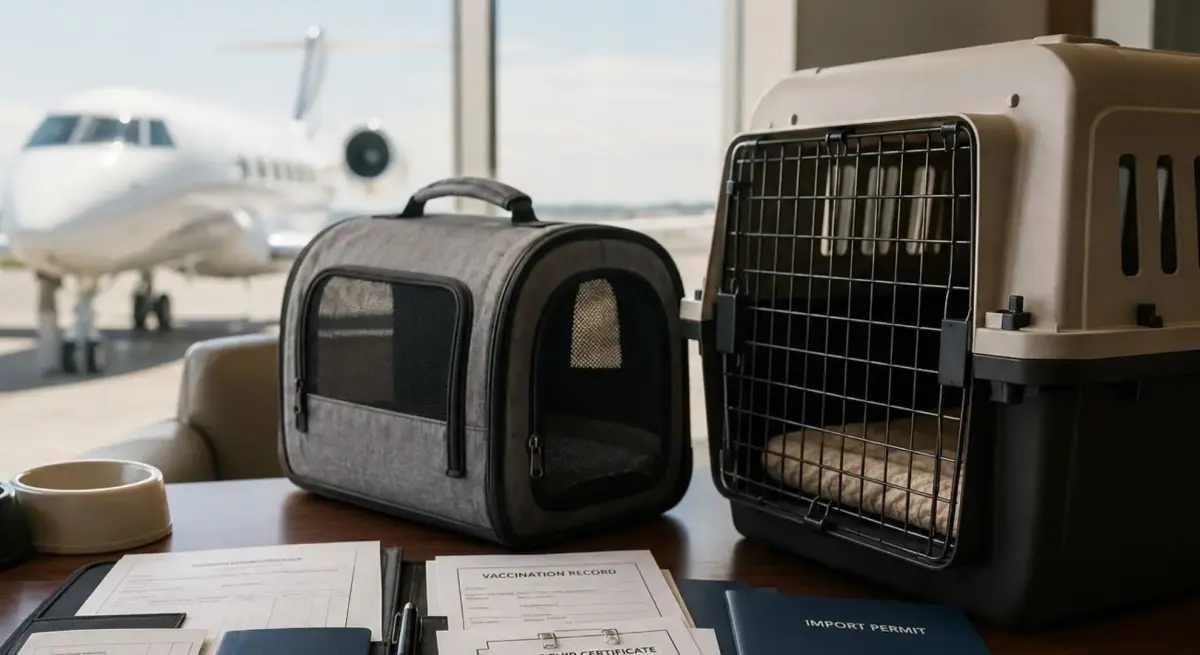
A typical preparation file may include:
- ISO 11784/11785-compatible 15-digit microchip, ideally implanted before rabies vaccination
- Valid rabies vaccination, usually completed at least 30 days before travel
- Rabies-antibody test where required, often with a minimum result of 0.5 IU/ml
- Indonesian import permit obtained before departure
- Government-endorsed veterinary health certificate
- Advance notification to the destination quarantine office
- Original vaccination, laboratory, permit, ownership, and species documents carried onboard
- Arrival inspection and possible government quarantine
For U.S.-origin pets, the USDA’s Indonesia health certificate for dogs and cats includes microchip verification, rabies vaccination, a rabies neutralising antibody titration result of 0.5 IU/ml or greater, and veterinary inspection close to departure. Travellers from other countries should follow the export-health-certificate process of their own government authority.
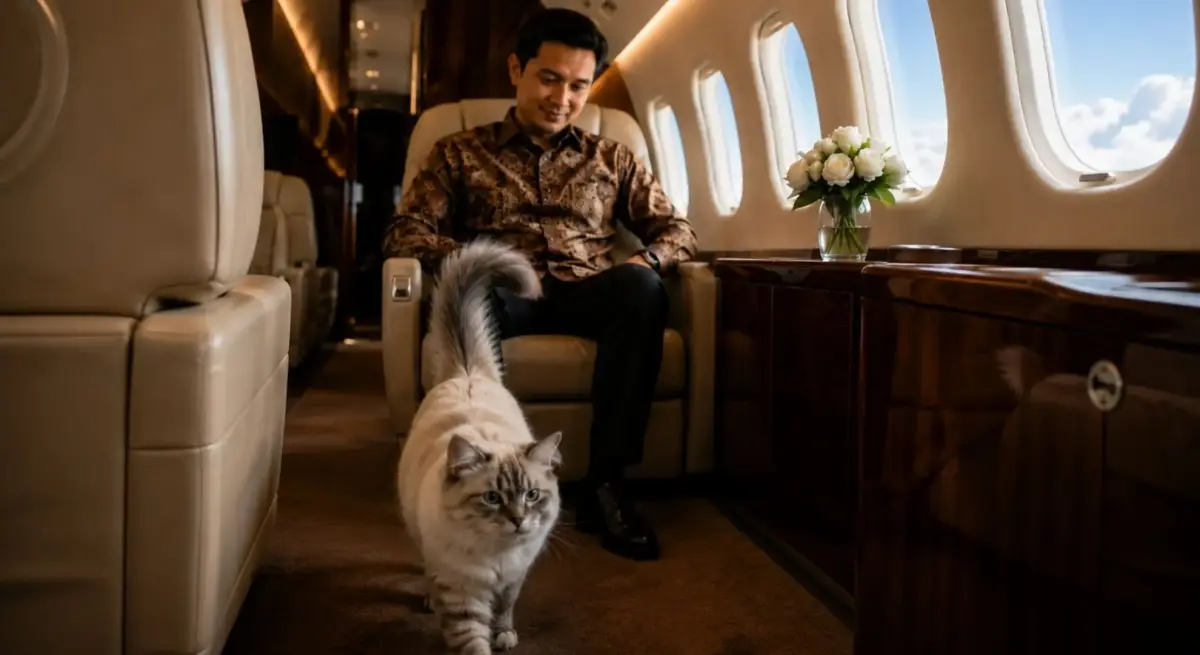
Quarantine and arrival clearance
Indonesia can require quarantine or inspection on arrival, and dogs and cats may face government quarantine for up to 14 days. This is a major difference from many compliant pet movements into parts of Europe or the United States, where release after inspection is often possible when documentation is correct.
Quarantine exposure should be built into the itinerary from the start. For private jet travellers, this affects arrival timing, ground transport, accommodation planning, and any onward movement within Indonesia. An after-hours arrival can create delays if quarantine officers are not available, even if the aircraft and passengers can be processed through a private terminal.
Travellers should also declare pet food, treats, medicines, bedding, and other animal-origin products honestly. These items may be inspected or confiscated. Concealing them can create more serious clearance issues than declaring them properly.
Travelling with birds, reptiles, rabbits, and exotic pets
Other animals should not be treated as ordinary pets. Birds, reptiles, rabbits, primates, and exotic species may require species-specific permits, veterinary conditions, CITES documentation, and additional quarantine review. Some animals may be prohibited depending on origin, disease risk, conservation status, or Indonesian biodiversity rules.
The USDA Indonesia page states that, for pet types not listed, travellers should contact the destination government authority for current requirements. It also notes that Indonesia currently requires cats, minks, ferrets, tigers, lions, Golden Syrian hamsters, bats, and all primates to travel with a negative SARS-CoV-2 PCR test prior to export, while dogs and some other live animals are treated differently.
For private jet travel, this means exotic pets should be cleared before the aircraft is quoted as a pet-friendly mission. The aircraft operator may also impose its own cabin, crate, restraint, cleaning, or liability rules.
Private jet charter planning precautions
Before confirming a private jet charter to Indonesia with a pet, secure written acceptance from every party involved in the arrival chain. Verbal confirmation is not enough for a first-time pet movement into a regulated destination.
The key planning checks are:
- Confirm the destination airport is an approved animal-quarantine entry point for the species
- Confirm quarantine-officer operating hours for the proposed arrival time
- Confirm the ground handler can coordinate animal inspection and transfer
- Confirm the operator accepts the pet in cabin or hold, depending on aircraft and animal type
- Confirm crate, restraint, cleaning, and liability requirements
- Confirm every technical stop, because a fuel stop may trigger transit-health rules
- Confirm whether onward domestic movement requires a second permit or separate approval
For Bali or another secondary island, treat the journey as two movements: first, international import into Indonesia; second, domestic transfer to the final island. These should be planned separately and confirmed in writing.