

How Security Screening Differs from Commercial Airports
Boarding a private aircraft feels worlds apart from a commercial concourse—no shoes-off conveyor belt, no 45-minute queue—yet security for private flights is very real. The TSA oversees a program called the DCA Access Standard Security Program (DASSP) and partners with FBO staff and certified screeners to keep general-aviation passengers safe. Below, we demystify the process so you know exactly what to expect and why it differs from the airline routine.
Still weighing the cost of charter versus airline? Start with our pillar guide "Is it cheaper to fly privately in the US?", and refer to this article after for the fine points about security.
1. No TSA Checkpoint, But Not a Free Pass
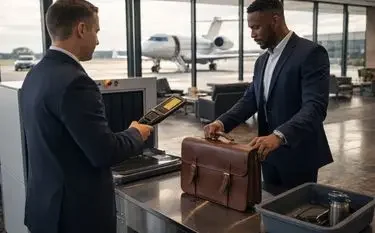
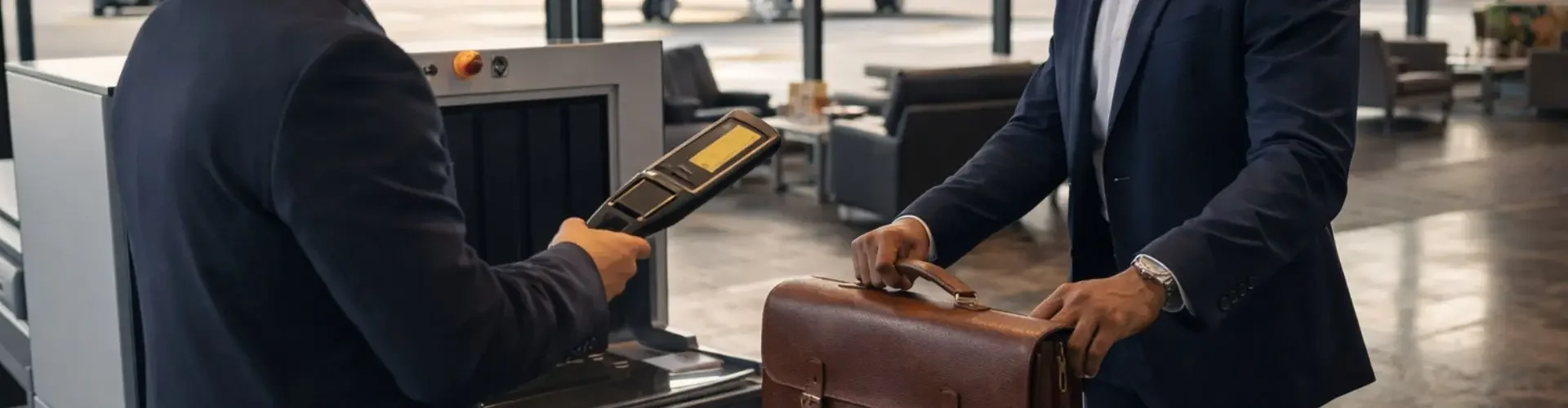
Private-jet travellers do not join the public TSA line. Instead, you enter a dedicated FBO (Fixed-Base Operator) where a trained screener greets your party. Identification, watch-list vetting and baggage inspection happen discreetly—often in under two minutes.
- ID & manifest check – Your passport or driver’s licence is matched to the flight manifest pre-filed by Jetbay.
- Bag scan or hand-search – Most FBOs use X-ray or an ETD (explosive trace detection) swab.
- Metal-detector wand – A quick sweep replaces the full-body scanner.
The process meets TSA Part 1544 requirements but scales to the lower passenger count typical of private aircraft.
2. Watch-List Vetting in the Background
Every passenger name is run against the TSA Secure Flight database before take off. The TSA's Secure Flight program matches names against federal watch lists to identify potential security threats.
Jetbay also uploads manifests via an encrypted portal as soon as the booking is confirmed, so vetting finishes long before you reach the lounge. If a match occurs, the flight cannot depart until cleared—exactly as with airlines.
3. What About the Crew?
Pilots and cabin attendants hold TSA-issued badges and undergo recurrent training. Many also carry a Known Crew Member (KCM) credential allowing fast passage through commercial terminals when dead-heading.
4. Bringing Liquids, Pets or Sensitive Cargo
Private jet passengers often have more flexibility regarding carry-on items, including liquids and pets. However, it's essential to inform the charter operator in advance about any unusual cargo to ensure compliance with regulations.
Liquids
Private travellers may carry water bottles or fragrance above 3-1-1 limits; the screener simply inspects them.
Pets
Cats, dogs and even falcons fly in the cabin once vaccination and import paperwork (if international) are verified.
High-value items
Artwork, prototypes or medical samples stay with you, eliminating the risk of checked-bag loss.
When booking, tell your Jetbay charter manager about unusual cargo. We can pre-clear any TSA or Customs formalities so your departure timetable stays intact.
5. Special Rules at Washington D.C. and New York
Flights into Washington Dulles, Reagan National or Teterboro airport may trigger extra steps under the DCA Access Standard Security Program (DASSP). This includes additional security measures such as armed security officers on board or an advance TSA flight plan.
6. Time Saved—The Hidden Dividend
The streamlined security process at FBOs allows private jet passengers to board more quickly. The process is often within 15–20 minutes, versus 60–90 minutes at a commercial terminal.
7. How Jetbay Makes Security Seamless
- Pre-flight manifest upload – Names, IDs and any pet details are submitted as soon as you approve the quote.
- FBO appointment slot – Screening staff are waiting, not scrambling.
- Real-time alerts – If TSA introduces pop-up directives (e.g., holiday travel advisories), your charter manager updates you instantly to ensure a smooth and secure travel experience.
Ready for Hassle-Free Boarding?
Private flying doesn’t skip security; it perfects it. Boarding becomes faster, quieter, but just as safe. Let Jetbay handle the compliance so you focus on the destination.
Request your secure private-jet quote.
Frequently Asked Security Questions About Private Jet Security
1. Do private-jet passengers ever face TSA PreCheck?
No—TSA PreCheck applies only to commercial checkpoints. Private jet travelers undergo separate, expedited security procedures at FBOs.
2. Can firearms travel in the cabin?
Transporting firearms on private jets is subject to strict regulations. Contact Jetbay in advance to ensure compliance with TSA and other relevant authorities. We’ll coordinate permits and secure storage in advance.
3. Is there secondary screening on arrival?
For domestic flights, no. Private jet passengers typically disembark and collect their luggage without additional screening. International arrivals clear U.S. Customs via a private lounge desk. However, this is typically faster than commercial airline security procedures.