
 Share
Share

About Private Jet Travel in Bath
Bath: Roman Heritage and Georgian Design
Bath is a compact heritage city in South West England, approximately 19 miles from Bristol Airport. Founded around natural thermal springs, it developed from the Roman settlement of Aquae Sulis into one of Britain’s most influential Georgian spa destinations.
The city is recognised by UNESCO both as the City of Bath World Heritage Site and as part of the transnational Great Spa Towns of Europe. Roman remains, neoclassical architecture and the surrounding green hills all contribute to its distinctive character.
Unlike a larger metropolitan destination, Bath can be explored without an extensive daily transfer schedule. Its principal historical sites, hotels, restaurants and shops are concentrated within a walkable centre, while Somerset country estates and the southern Cotswolds remain accessible for day trips.

Private Jet Access via Bristol Airport (BRS)
Bristol Airport is the primary arrival point for private jet travel to Bath. Its business aviation facilities include a dedicated FBO, private passenger lounge, aircraft parking and screening services. The airport operates around the clock, subject to individual flight permissions and operational requirements.
Road transfers from Bristol Airport to central Bath typically take around 45 minutes, although traffic conditions should be considered when coordinating arrival times. Chauffeured transport can meet passengers at the private terminal for a direct transfer to their hotel, residence or meeting location.
Cotswold Airport at Kemble and Gloucestershire Airport may provide alternatives for journeys combining Bath with the Cotswolds. Aircraft performance, airport operating hours, border arrangements, handling availability and the final ground journey should all be reviewed before selecting an airport.
Roman Bathing and Historic Springs
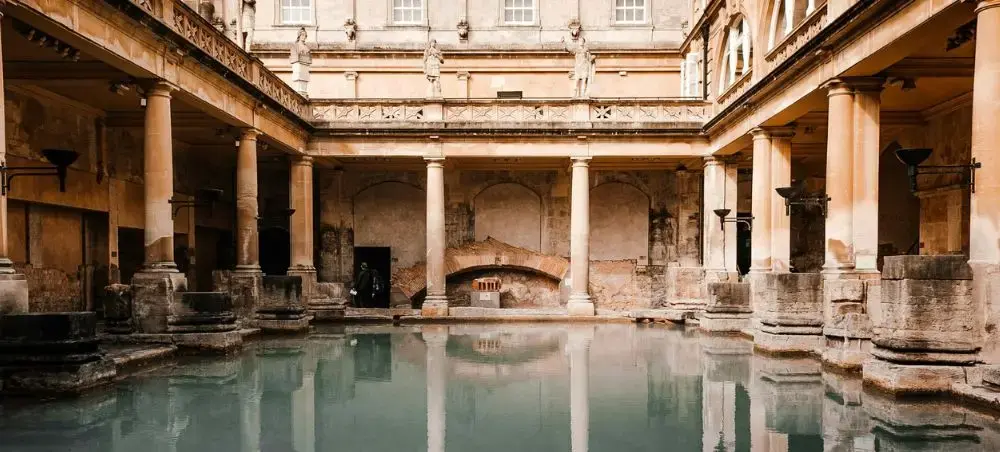
Bath’s identity begins with the natural thermal water beneath the city. At the Roman Baths, visitors can walk through the remains of an ancient religious and bathing complex developed around the hot springs. The site includes original Roman pavements, the Sacred Spring and the ruins of the Temple of Sulis Minerva.
The surviving complex illustrates how bathing, worship and social life were connected in Roman Britain. Although visitors cannot enter the water at the historic site, the museum provides a detailed account of the engineering and rituals associated with the settlement of Aquae Sulis.
The neighbouring Pump Room represents a later chapter in Bath’s spa history. During the Georgian period, visitors came to drink the mineral water, attend social events and take part in the formal routines of the fashionable spa season. Together, the Roman Baths and Pump Room show how the same natural resource shaped the city across different eras.
Georgian Architecture and City Landscapes
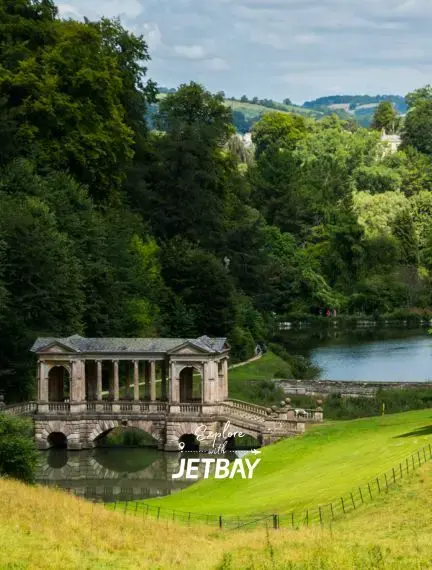
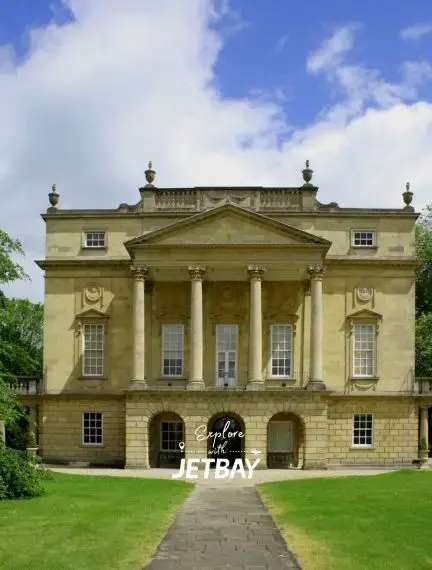
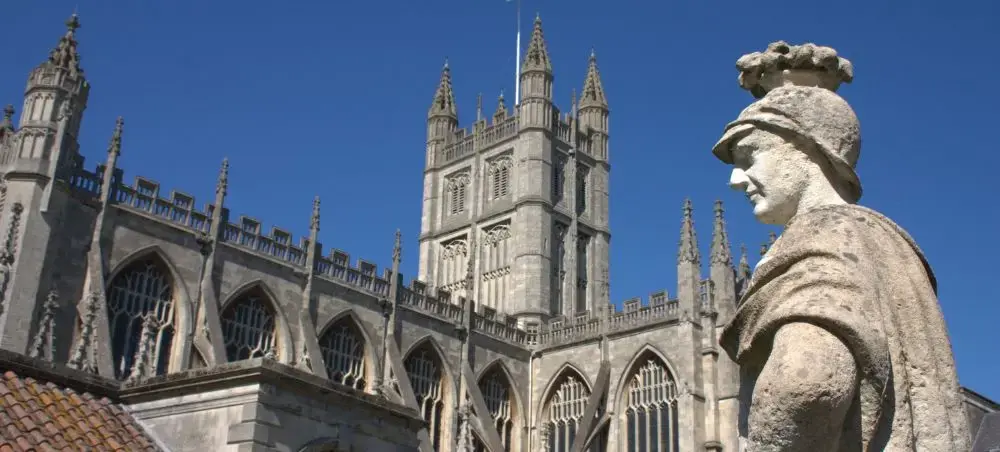
Bath underwent a major transformation during the 18th century, when architects and developers created a planned city of terraces, crescents and public spaces from locally quarried Bath stone. The result is an unusually coherent urban landscape in which architecture and the surrounding hills are closely connected.
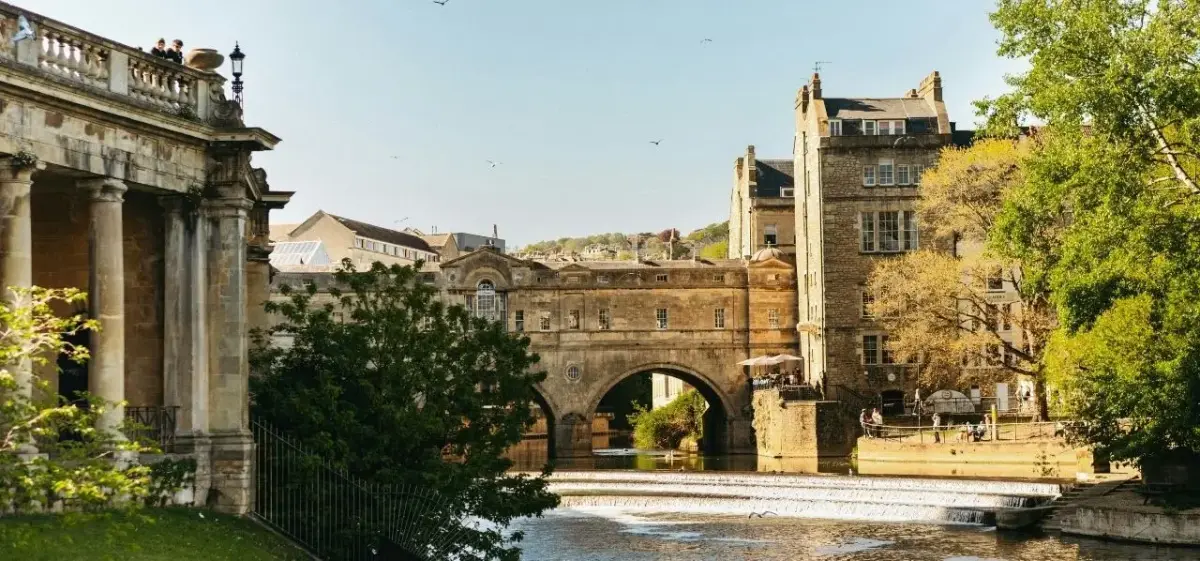
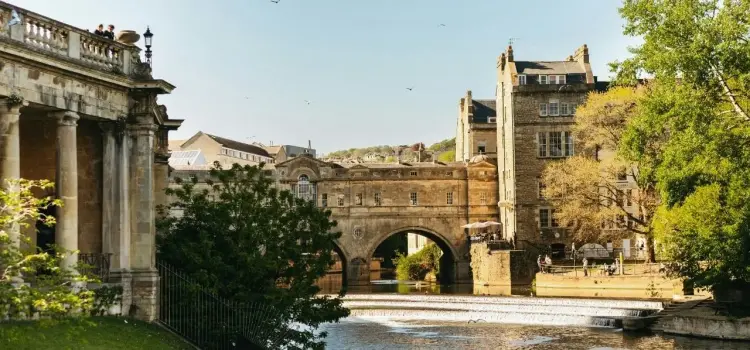
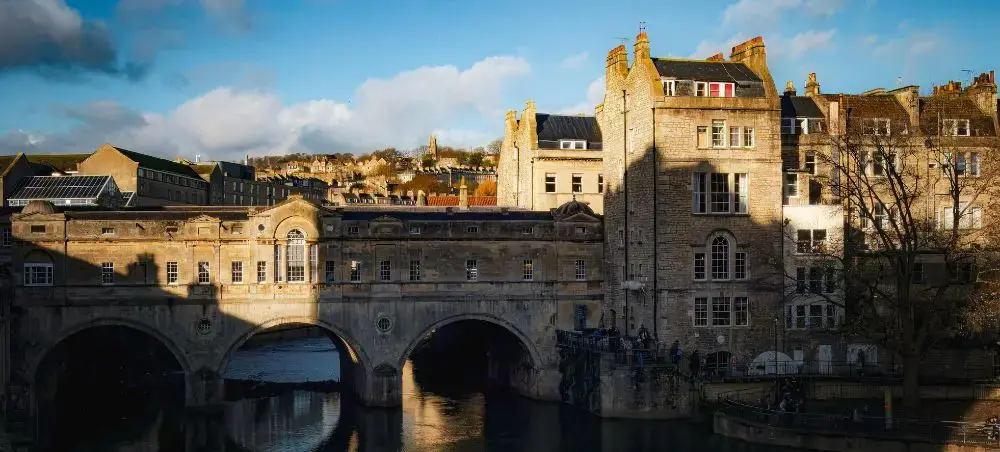
Pulteney Bridge, designed by Robert Adam, crosses the River Avon with shops built along both sides. Nearby, Great Pulteney Street provides one of the city’s broadest formal approaches, while riverside paths and gardens offer views towards the bridge and weir.
The city’s scale rewards exploration on foot. Streets leading away from the main landmarks reveal smaller squares, independent shops and residential terraces that provide a quieter perspective on Bath’s architectural character.
Royal Crescent and The Circus
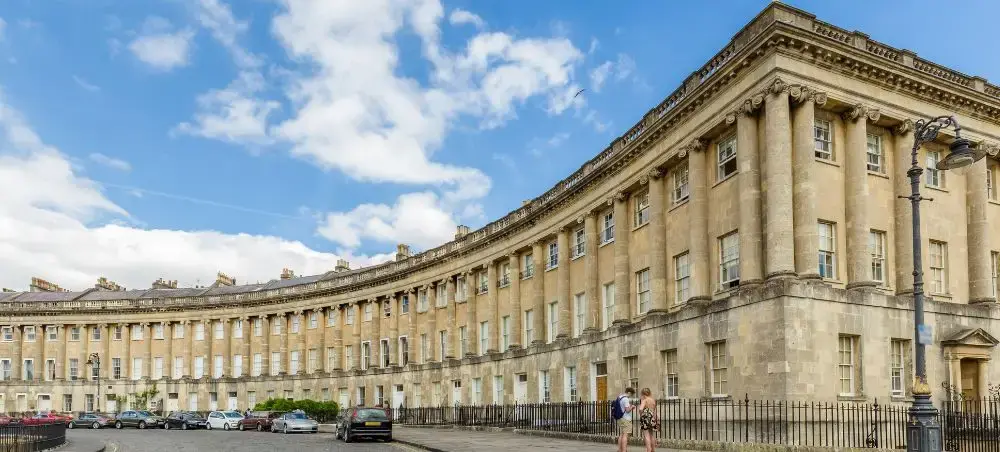
The Royal Crescent and The Circus are Bath’s best-known Georgian ensembles. Designed by John Wood the Younger and John Wood the Elder respectively, they demonstrate how Palladian principles were adapted to large residential developments.
The Royal Crescent forms a sweeping arc overlooking lawns and parkland, creating the impression of a country-house façade on an urban scale. The Circus uses three curved terraces to enclose a circular space inspired by classical architecture.
These were not conceived as isolated monuments. Their approaches, sightlines and relationship with Bath’s surrounding landscape formed part of a wider plan to make the city a setting for social life, recreation and public display.
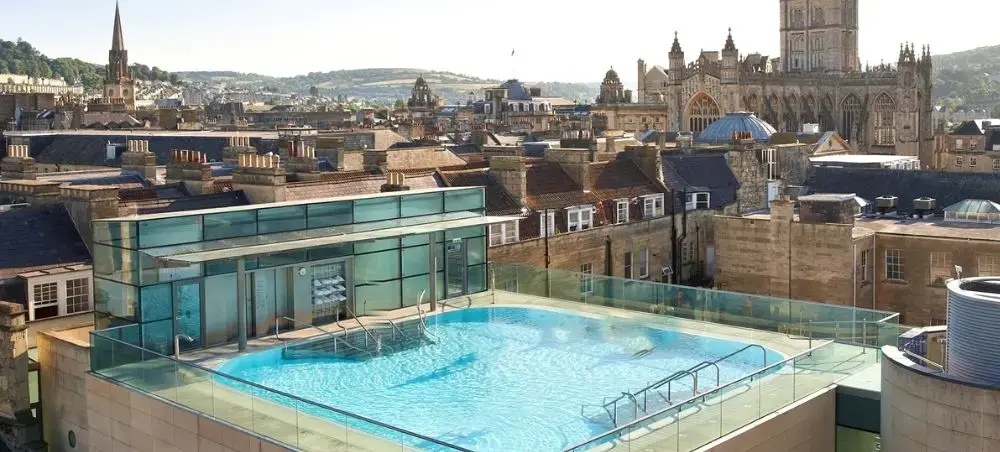
Contemporary Spa Experiences and Wellbeing
Bath remains a functioning spa destination rather than simply a city preserving its bathing history. The natural springs continue to supply modern facilities, allowing visitors to experience the thermal water within a contemporary setting.
Thermae Bath Spa uses water from the Hetling and Cross Springs and includes indoor bathing areas and a rooftop pool overlooking the city. It is the most direct modern continuation of Bath’s historic relationship with wellness, although treatments and private sessions should be reserved in advance during weekends and peak travel periods.
Several of the city’s hotels also operate dedicated spas, making Bath suitable for short wellness stays without requiring extensive travel between accommodation and activities. For private jet travellers arriving for a weekend, the compact layout makes it possible to combine treatments, dining and historical visits within a controlled itinerary.
Dining, Culture and Independent Shopping
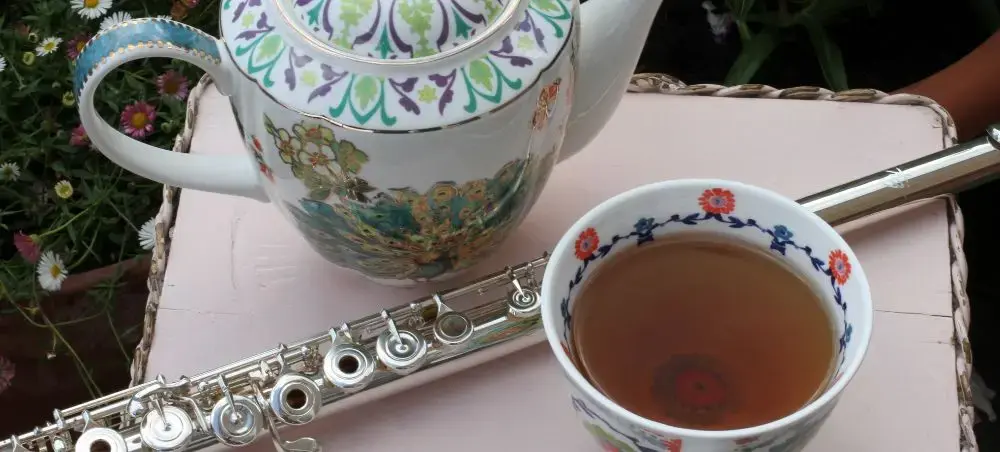
Bath’s dining scene ranges from formal tasting menus and hotel restaurants to historic tearooms, contemporary British cooking and neighbourhood establishments. Traditional afternoon tea remains closely associated with the city, while restaurants increasingly draw on produce from Somerset and the West Country.
Theatre, music and literary events take place throughout the year. Bath’s connection with Jane Austen remains prominent, but its cultural programme extends to classical music, contemporary exhibitions, live performance and seasonal festivals.
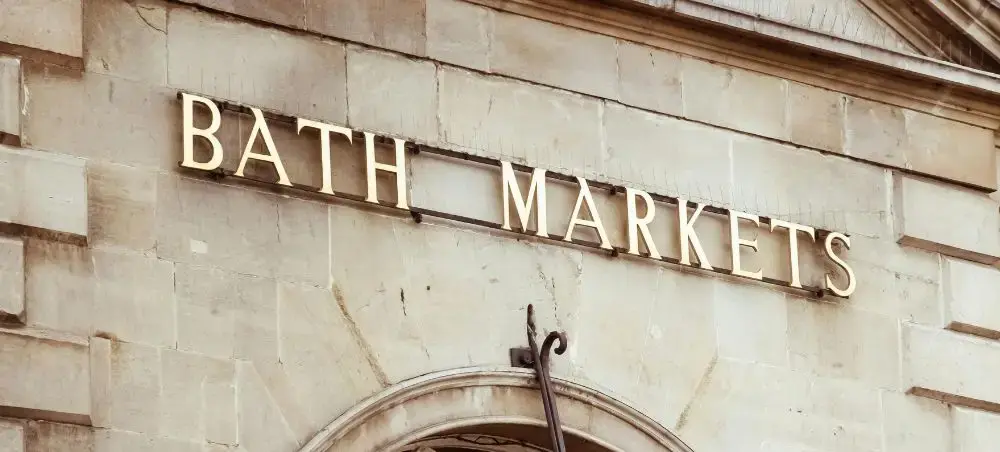
Independent shops are concentrated around Milsom Street, Walcot Street, Bartlett Street and the smaller passages surrounding the centre. Because the main districts are close together, shopping, dining and cultural appointments can be incorporated into the same day without lengthy vehicle transfers.
Bath as a Gateway to Somerset and the Cotswolds
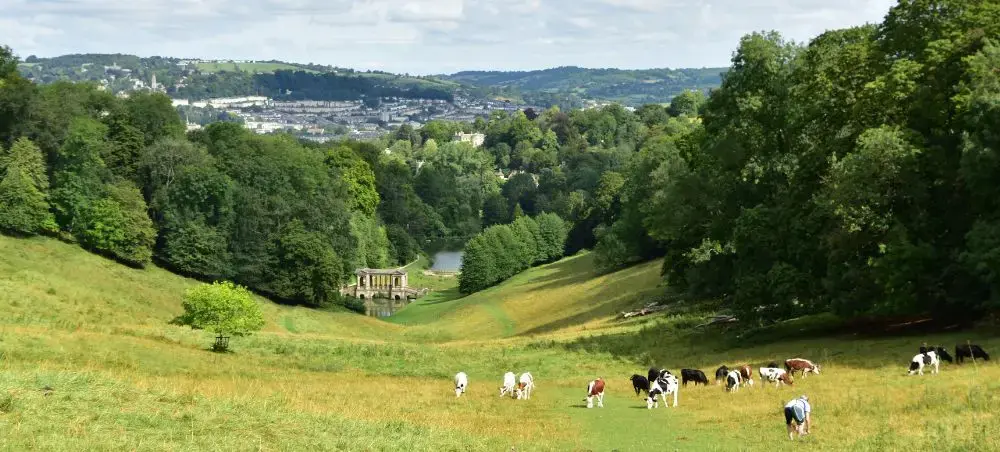
Bath provides a practical base for exploring rural South West England. The Mendip Hills, Wiltshire countryside and southern Cotswolds can all be incorporated into an extended itinerary, while Bristol offers a contrasting programme of business, dining and cultural activity.
Private houses and country hotels outside the city may offer greater space and seclusion for families or groups. In these cases, the most efficient airport is not always the one closest to Bath’s centre. The precise accommodation address should be considered alongside airport handling, aircraft suitability and road access.
Seasonal demand can affect both charter availability and accommodation. Summer events, school holidays, Christmas markets and major sporting weekends may increase aircraft positioning costs and limit preferred arrival times. Booking earlier gives a broker more scope to compare operators and airports, although charter pricing remains dynamic until the aircraft is confirmed.
Why Private Jet Travellers Choose Bath
Bath combines internationally significant heritage with the convenience of a compact city. Travellers can move easily between Roman sites, Georgian streets, modern thermal facilities, restaurants and private accommodation while retaining access to the wider English countryside.
A private jet charter can simplify travel for passengers arriving from European business centres or connecting Bath with several UK destinations. It also provides control over departure timing, passenger composition and luggage requirements.
Aircraft selection should reflect the mission rather than prestige alone. A light or midsize jet may be appropriate for many European routes, while larger groups and long-range journeys may require an aircraft with greater cabin capacity, baggage space or nonstop performance.
Charter a Private Jet to Bath with Jetbay
Jetbay can arrange a private jet charter to Bath based on your departure point, passenger requirements and complete ground itinerary. Each proposal considers aircraft suitability, operator availability, airport handling and onward transfer time.
Transparent charter pricing helps travellers understand the full mission cost, including relevant positioning, airport and handling requirements.
Explore Jetbay's private jet charter flights to compare suitable aircraft and plan a considered arrival into Bath.