

 Share
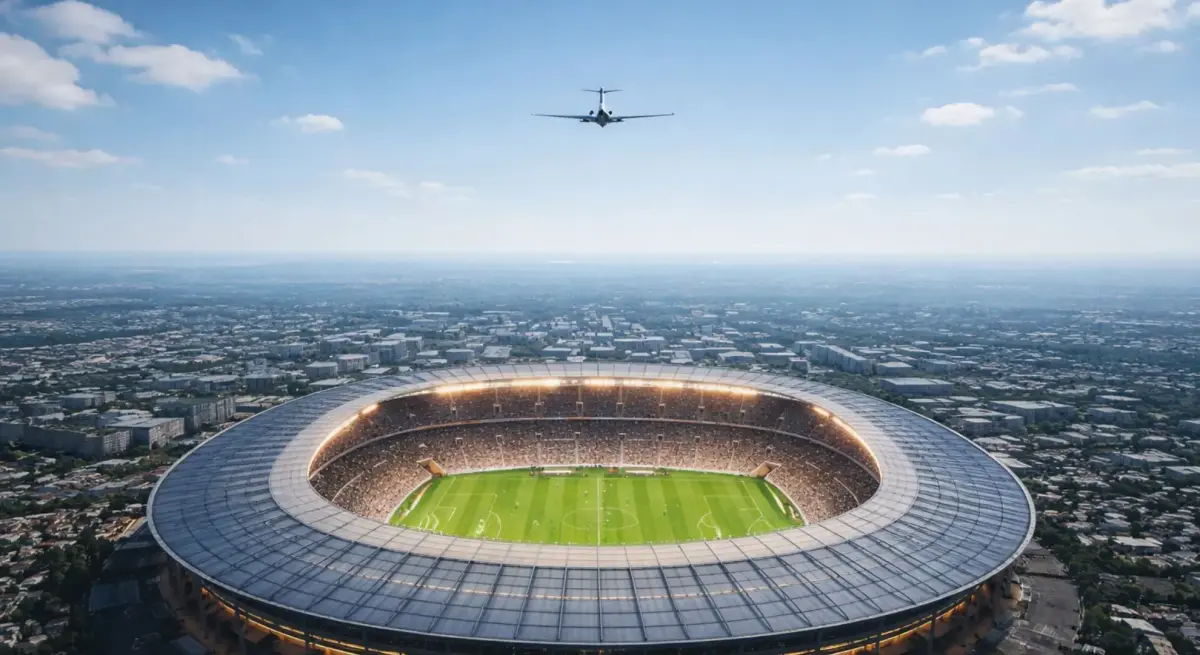
SharePrivate jet demand is already building ahead of the 2026 FIFA World Cup, with business aviation operators and charter providers preparing for one of the most complex event-travel periods in North America.
The tournament will run from June 11 to July 19, 2026, across 16 host cities in the United States, Canada, and Mexico, with 104 matches scheduled across the expanded 48-team format. FIFA describes the 2026 edition as the biggest World Cup to date, with matches spread across three host nations.

For private jet travelers, this creates both opportunity and pressure. The World Cup offers the flexibility to move between cities, attend multiple matches, and avoid crowded commercial terminals. But it also means higher demand for aircraft, airport slots, FBO access, parking, ground handling, customs coordination, and cross-border planning.
For UHNW travelers, family offices, PAs, EAs, corporate hospitality teams, and sponsor groups, the message is clear: World Cup private jet travel should be planned earlier than a standard leisure or business trip.
Why the 2026 World Cup Matters for Private Aviation
Unlike a single-location event, the 2026 FIFA World Cup is spread across North America. Matches will be played in the United States, Canada, and Mexico, creating a travel pattern that is closer to a multi-city roadshow than a one-off sports trip.
GlobalAir reported that charter providers are already seeing early interest, with some forecasts pointing to significantly higher demand on host-city routes during peak match periods. The report also noted that inquiries are arriving earlier than usual, particularly for multi-leg itineraries linked to knockout rounds and the July 19 final.
Aviation Week has also reported that business aviation is preparing for elevated traffic across the host-city network, with attention on airport capacity, airspace restrictions, parking, and operational planning.
For the end client, this does not mean private jet travel will be unavailable. It means the best aircraft, preferred airports, and most convenient schedules are likely to become more competitive as the tournament approaches.
What This Means for UHNW Travelers, PAs, EAs, and Corporate Charter Bookers
For travelers attending the World Cup, the flight itself is only one part of the journey. A well-planned private aviation itinerary also needs to account for match timing, guest movement, airport access, customs, security, hotel locations, ground transfers, and potential schedule changes.
This is especially important for:
- UHNW families attending multiple matches
- PAs and EAs coordinating executive travel
- corporate sponsors and hospitality groups
- football club owners, investors, and VIP guests
- brand partners and media teams
- multi-city leisure travelers combining matches with business or vacation plans
- international visitors flying between the U.S., Canada, and Mexico
During the World Cup, the question is not just “Which jet is available?” It becomes: Which aircraft, airport, schedule, and routing can realistically support the full trip?
Demand Is Expected to Concentrate Around Key Match Windows
World Cup travel demand will not be evenly distributed. The busiest aviation periods are expected around opening matches, high-profile group-stage fixtures, knockout rounds, semifinals, the third-place match, and the final.
FIFA’s official match schedule confirms the tournament will take place across 16 host cities, with the final scheduled for July 19, 2026, in the New York New Jersey area.
For private jet customers, the highest-pressure travel windows are likely to include:
Opening Stage: June 11 onward
Travelers may fly into Mexico City, U.S. host cities, or Canadian host cities depending on team schedules, guest plans, and hospitality access.
Group Stage: June 11–27
This phase may create frequent short-haul and mid-range charter requests between host cities as supporters and VIP groups follow national teams.
Knockout Rounds: Late June to Mid-July
Demand usually becomes more concentrated as match importance increases and travel plans become more reactive.
Semifinals and Final Week: July 14–19
The final week is expected to be one of the tightest periods for aircraft availability, airport parking, hotel access, and premium ground transport.
Host-City Travel Will Require More Detailed Planning
The 2026 World Cup will create an unusually wide private aviation map. Instead of planning for one city, travelers may need to coordinate multiple arrivals and departures across North America.
Popular private aviation movements may include:
- New York / New Jersey for the final
- Dallas / Fort Worth for major knockout-stage activity
- Los Angeles for West Coast fixtures and international arrivals
- Miami for Latin American and Caribbean connectivity
- Atlanta, Houston, Kansas City, Philadelphia, Boston, Seattle, San Francisco Bay Area, and other U.S. host regions
- Toronto and Vancouver for Canadian matches
- Mexico City, Guadalajara, and Monterrey for Mexico-based fixtures
Each city may present different airport options, slot conditions, customs considerations, parking availability, and transfer times. The right airport may not always be the closest one to the stadium. For private jet travel, the better option is often the airport that can support the aircraft, handling, passenger experience, and schedule with the lowest operational risk.
Airport Slots, Parking, and FBO Capacity May Become the Real Constraint
For private jet travelers, the aircraft is only one part of the booking. During major events, the bigger challenge can be infrastructure.
GlobalAir reported that pressure is expected around aircraft availability, airport slots, parking, and ground handling services as the tournament approaches. It also noted that special-event FBO parking fees may increase operating costs during peak periods.
The FAA has also issued World Cup flight planning resources and confirmed that airspace restrictions will be established over certain matches and related fan events at the request of federal security agencies.
For private jet passengers, this may affect:
- preferred airport availability
- arrival and departure timing
- aircraft overnight parking
- last-minute itinerary changes
- helicopter or ground transfer planning
- customs and immigration timing
- multi-city trip sequencing
This is why early planning matters. A route may look simple on paper, but event-period aviation logistics can change the best operational choice.
Why Last-Minute Bookings May Be Harder During the World Cup
Private jet customers often book on short notice. For regular business or leisure travel, this can work well when aircraft supply is available. The World Cup is different.
Because demand will be spread across multiple cities and several weeks, aircraft may be repositioned around match schedules, operator commitments, and high-demand routes. That can make last-minute availability more expensive, less flexible, or more dependent on compromise.
Multi-City World Cup Itineraries Need a Different Booking Strategy
A standard private jet booking might involve a simple one-way or round-trip flight. World Cup travel is more likely to involve multi-city movement.
For example:
- A family may attend group-stage matches in Los Angeles and then fly to Dallas for a knockout round.
- A corporate group may host clients in New York before traveling to Miami or Atlanta.
- An international traveler may arrive in Mexico City, continue to the U.S., and end the trip in Canada.
- A sponsor team may need aircraft access across several cities within a short window.
These itineraries require more than aircraft sourcing. They require route logic, timing buffers, customs planning, airport alternatives, and contingency options.
For executive assistants and personal assistants, this is where the booking process should become more strategic: build primary and backup airport plans, understand cancellation and schedule flexibility, and avoid assuming that the nearest airport will always be available.
Cross-Border Travel Will Be a Key Consideration
Because the 2026 World Cup is hosted across the United States, Canada, and Mexico, some private jet itineraries may involve international border crossings within North America.
That means travelers should consider:
- passport validity
- visa or entry requirements
- customs arrival airports
- pet travel rules, if applicable
- crew duty planning
- aircraft permissions
- passenger manifest accuracy
- timing between match cities
The U.S. government has also introduced World Cup-related travel resources, including FAA safety planning for pilots and passengers attending matches.
For UHNW travelers and corporate groups, the earlier these details are checked, the smoother the final itinerary is likely to be.
Pricing: Why World Cup Charter Costs May Move Quickly
Private jet pricing during the World Cup is expected to be dynamic. Pricing will depend on aircraft category, distance, positioning, airport fees, crew duty, parking, handling, customs arrangements, and whether the aircraft can remain with the passenger or must reposition.
GlobalAir reported that some host-city round-trip charters may range from $15,000 to $60,000, depending on aircraft type and distance, while operational costs such as special-event parking may add pressure during peak windows.
For clients, the key point is not to treat event-period pricing like ordinary route pricing. During the World Cup, cost may be influenced by:
- how many aircraft are already committed
- whether overnight parking is available
- whether the jet must reposition
- whether the trip crosses borders
- whether the request involves a peak match day
- how much flexibility the traveler has on timing
- whether the route is popular with supporters or sponsors
The earlier a client begins planning, the more room there is to compare aircraft categories, airport options, and route structures.
Could Empty Legs Help World Cup Travelers?
Empty-leg flights may appear as aircraft reposition between World Cup host cities. These can sometimes offer savings compared with standard charter pricing, but they are not guaranteed and may not match the exact timing a traveler needs.
For World Cup travel, empty legs may work best for clients who have flexibility around:
- departure time
- airport choice
- aircraft category
- routing
- same-day versus overnight travel
- non-critical match days
They are less suitable for travelers who must arrive for a specific match, hospitality event, sponsor dinner, or executive meeting.
Jetbay's view:
Empty legs can be useful, but they should not be the foundation of a high-stakes World Cup itinerary unless the traveler has a strong backup plan.
Jetbay's Advice for World Cup Private Jet Charter Travelers
For clients planning private jet travel around the 2026 FIFA World Cup, Jetbay recommends a more structured booking approach.
1. Start with the match schedule, not the aircraft
Identify the match days, cities, and likely movement pattern first. The aircraft should support the itinerary, not force the itinerary to fit the aircraft.
2. Build a primary and backup airport plan
The closest airport may not always be the most practical during peak event periods. Keep alternative airports in mind.
3. Confirm passenger count and luggage early
Aircraft category matters more when multiple guests, formalwear, sports equipment, or extended-trip luggage are involved.
4. Plan for cross-border requirements
For U.S., Canada, and Mexico itineraries, allow time for customs, immigration, and documentation checks.
5. Avoid relying on last-minute availability
Last-minute bookings may still be possible, but the best aircraft and airport options are likely to move earlier than usual.
6. Leave room for match-result changes
For knockout-stage travel, flexibility is essential. Teams may move, schedules may shift, and travelers may decide to follow a team deeper into the tournament.
The Bottom Line: World Cup Private Jet Travel Is About Control
The 2026 FIFA World Cup is expected to be one of the most significant private aviation events in North America. With 16 host cities, three countries, and more than a month of matches, demand will not be limited to one weekend or one airport.
For UHNW travelers and corporate charter customers, private aviation offers privacy, speed, flexibility, and control. But during a major global event, those advantages depend on planning.
The best World Cup private jet itinerary will not simply be the fastest route on a map. It will be the itinerary that balances aircraft availability, airport access, match timing, ground movement, border requirements, and schedule flexibility.
Plan Your Private Jet to FIFA World Cup
Flying to the 2026 FIFA World Cup?
Learn more about private jet charters and plan your world cup private jet travel. For more information, explore Jetbay's 2026 FIFA World Cup page.
References
- GlobalAir, “Private jet charter demand surges ahead of 2026 FIFA World Cup,” published May 5, 2026 and updated May 6, 2026.
- Aviation Week, “Bizjets Brace For FIFA World Cup Surge Across 16 U.S. Host Cities.”
- FIFA, official 2026 FIFA World Cup schedule and tournament information.
- Federal Aviation Administration, FIFA World Cup 2026 safety and flight planning resources.
- FAASTeam / FAA Flight Advisory, FIFA World Cup 2026 airspace restrictions notice.