

 Share
SharePrivate Jet vs Commercial Travel
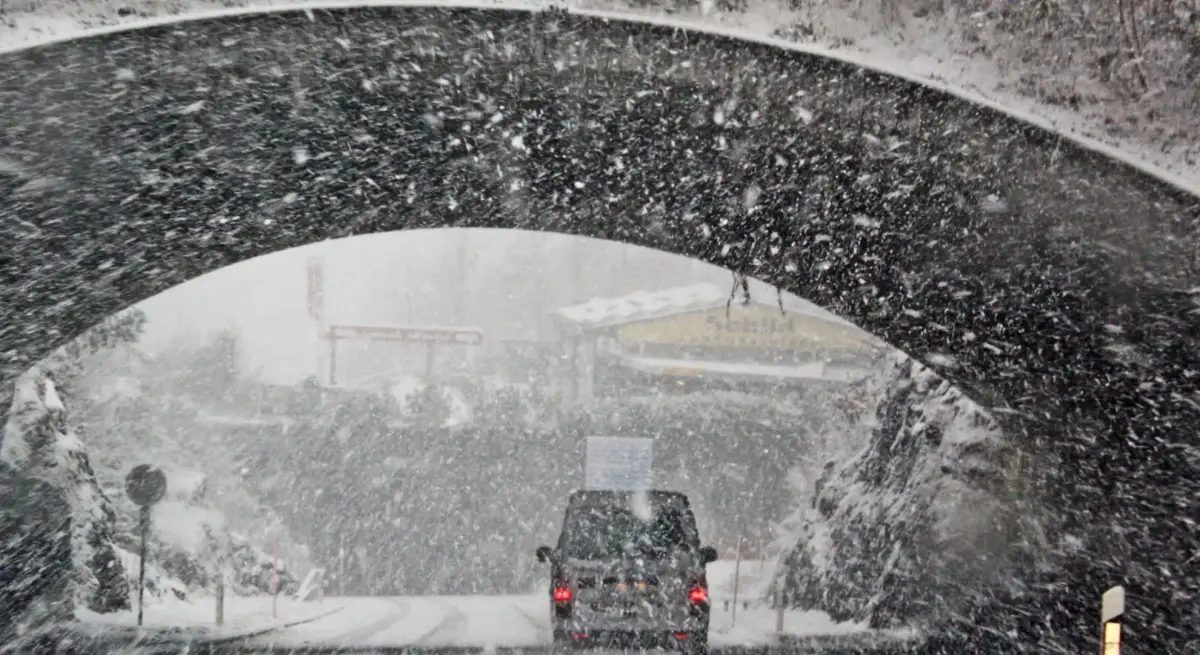
Winter weather remains one of the most disruptive forces in global aviation. Each year, snowstorms across North America and Europe bring widespread flight delays, cancellations, and missed connections, often during the busiest travel periods of the calendar.
While commercial airlines operate within tightly interconnected networks that are vulnerable to weather-related congestion, private aviation offers a different operating model. For time-sensitive travellers, understanding the difference can be the key to maintaining control when winter conditions deteriorate.
Why Winter Storms Disrupt Commercial Flights at Major Airports
Snowstorms affect far more than runway conditions. At large commercial hubs, even moderate winter weather can trigger a chain reaction across the entire air traffic system.
Common causes of winter delays include:
- Ground delay programs imposed by air traffic control
- Limited de-icing capacity shared across hundreds of aircraft
- Crew duty time restrictions, leading to cancellations
- Gate congestion, especially during peak holiday travel
- Network ripple effects, where delays at one hub impact flights nationwide
Because commercial airlines rely on fixed schedules and dense airport infrastructure, recovery from winter disruptions can take days (not hours).
Private Jet vs Commercial Flights During Winter Storms
Private aviation operates under a fundamentally different model. While no aircraft is immune to severe weather, private jet charter offers significantly more flexibility and operational control.
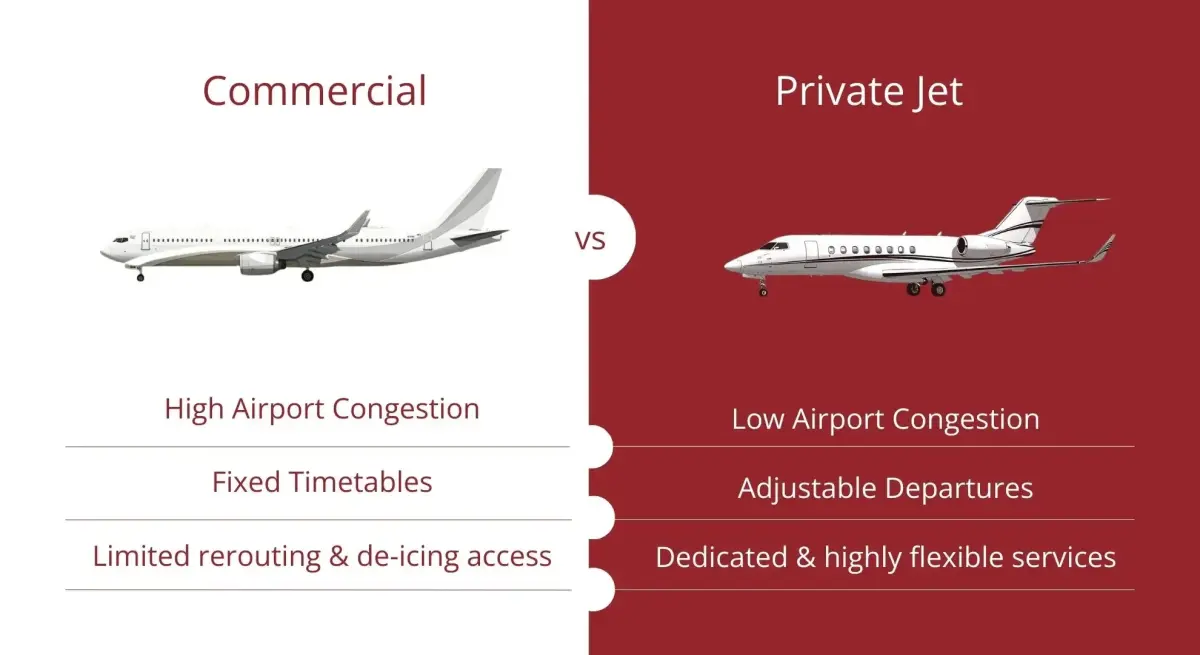
Private jet vs commercial flights during winter storms – comparison of delays, flexibility, and airport access
Private aircraft can often depart from or arrive at secondary airports with less congestion, adjust departure windows to avoid peak disruption periods, and reposition more efficiently once weather conditions improve.
How Jetbay Helps Travellers Navigate Weather-Related Disruptions
As a global jet charter broker, Jetbay works with a network of vetted aircraft operators to provide flexible solutions when commercial aviation faces operational strain.
Key considerations during winter travel include:
- Aircraft suitability: Selecting aircraft types appropriate for winter operations and shorter runways
- Airport strategy: Identifying alternative airports to reduce congestion risk
- Operational monitoring: Real-time weather and airport condition tracking
- Transparent charter pricing: Clear cost visibility, even during high-demand periods
Rather than relying on a single fleet or fixed route structure, Jetbay matches each flight with the most suitable aircraft and routing based on real-world conditions.
When Does Flying Private Make Sense During Winter Travel?
Private jet charter is not about avoiding weather altogether; it is about reducing exposure to systemic delays.
Flying private during winter storms may be particularly valuable for:
- Time-critical business travel with immovable commitments
- Holiday journeys where missed connections impact family schedules
- International travel requiring precise coordination
- Group or pet travel, where rebooking commercial flights is complex
- Travellers seeking predictability during peak winter periods
For these travellers, flexibility often outweighs the inconvenience and uncertainty of large-scale commercial disruptions.
Planning Smarter Winter Travels in 2026
Winter storms are an unavoidable part of aviation, but prolonged delays do not have to be. For travellers who value reliability, flexibility, and informed decision-making, private jet charter offers a viable alternative when commercial systems are under strain.
By learning how different aviation models handle winter disruptions, clients gain clarity and confidence. This helps them travel smoothly, even in the most unpredictable season of the year.
Explore flexible charter options with Jetbay today and plan your winter travel with clarity and control.
Frequently Asked Questions about Winter Flying
1. Are private jets affected by snowstorms?
Yes. Severe weather can impact all aviation. However, private flights often experience fewer cascading delays due to flexible scheduling and access to less congested airports.
2. Do private jets receive faster de-icing?
Private aircraft typically use dedicated fixed-base operators (FBOs), allowing for more efficient de-icing coordination compared to shared commercial terminals.
3. Can private jets fly to alternative airports during winter weather?
Yes. One main advantage of private aviation is access to smaller airports. These airports often stay open when big hubs are crowded.